
Real leather has a reputation problem it doesn’t fully deserve, and eco-leather has a reputation it hasn’t fully earned yet. Somewhere between the two is what actually matters if you’re deciding what to put between your kids’ shoes and your seat back: which one holds up.
Where Real Leather Wins
Structurally, genuine leather is the more durable material over a long enough timeline. Well-conditioned leather can hold up for 8 to 12 years before it starts showing real wear, which is longer than most people keep a car. It ages in a way that many owners actually like — a slight patina rather than an obvious decline.
The catch is the “well-conditioned” part. Leather is porous. It absorbs moisture, oils, and odors rather than repelling them, which means every spill and every muddy shoe print is an opportunity to actually stain it, not just dirty it. Keeping leather looking good for a decade requires conditioning products and a maintenance habit most people don’t stick to consistently — and once it cracks or fades from UV exposure, there’s no wiping that away.
Where Eco-Leather Wins
Eco-leather flips the tradeoff. It won’t out-survive perfectly-maintained real leather over a 10-year horizon, but it doesn’t need to be perfectly maintained to stay looking good. The surface is sealed rather than porous, so spills sit on top instead of soaking in — a wipe-down handles what would be a stain risk on leather.
That difference matters most in exactly the zone this site is built around: the lower seat back trim, which takes more repeated contact from shoes, mud, and pet hair than almost anywhere else in the cabin. It’s not a surface where “ages gracefully over a decade” is the relevant test — it’s a surface that gets kicked, scuffed, and dirtied on a weekly basis, and needs to still look clean after the two-hundredth wipe-down, not just the first one.
The Honest Tradeoff
If you’re asking which material lasts longer in a lab sense — structural integrity, resistance to cracking, total years before replacement — leather wins, provided someone actually keeps up with conditioning it. If you’re asking which one still looks good with zero maintenance effort, in the specific zone that takes the most abuse in the cabin, eco-leather wins by a wide margin. Most people buying a seat back protector for the kick zone care about the second question, not the first — which is why eco-leather is the material this category has mostly standardized on.
What This Means for Your Car
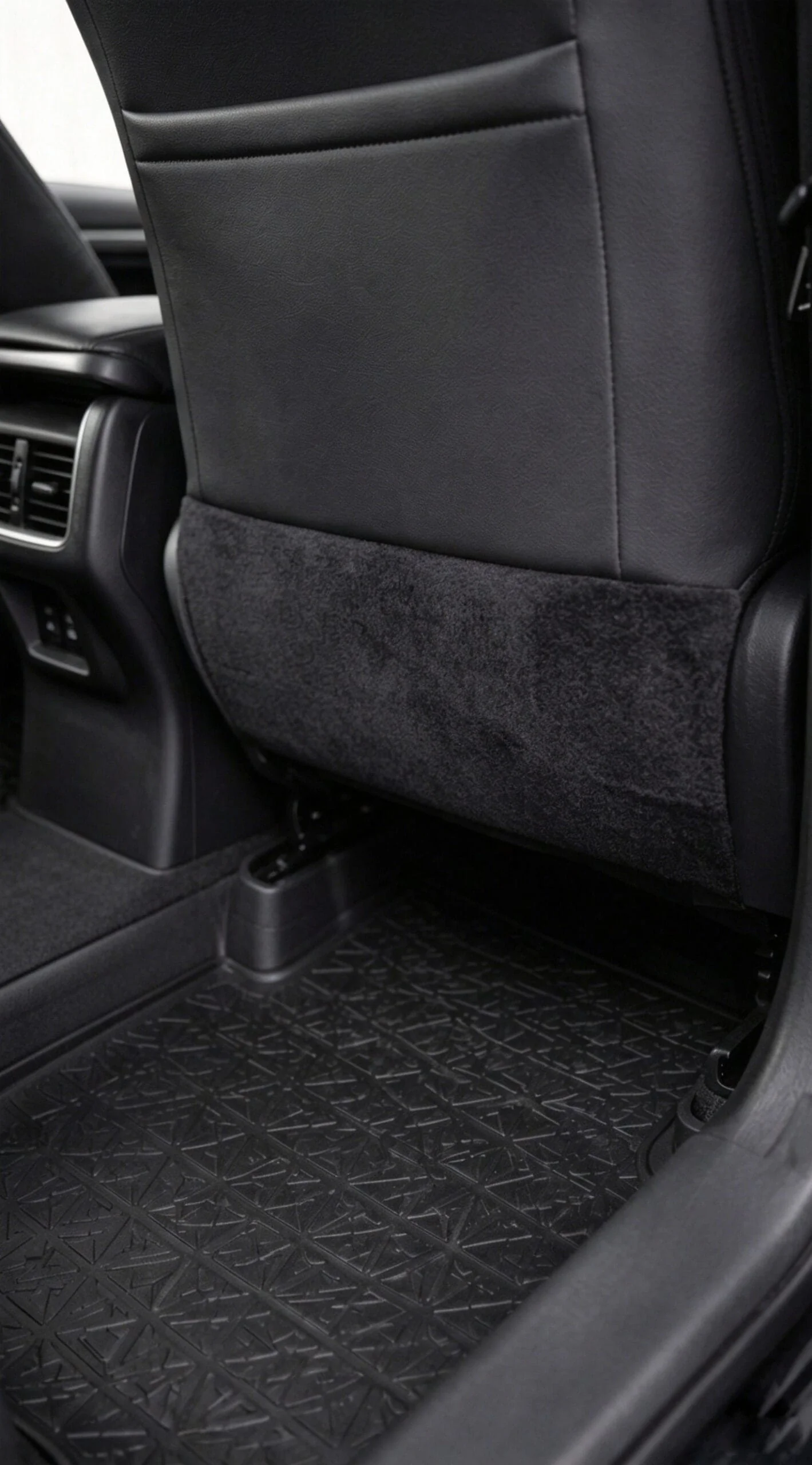
Both the Toyota RAV4 and Honda CR-V come with fabric or suede trim in this lower zone from the factory — not leather — which is exactly why it wears differently than the leather bolsters above it. An eco-leather protector over that factory trim gets you the wipe-clean durability where you need it, without touching or replacing anything structural in the seat itself.
The Cost Side of the Comparison
Real leather seat repair or professional reconditioning after staining typically runs into the hundreds of dollars — and that’s assuming the damage is catchable before it sets in permanently. An eco-leather kick mat sits at a fraction of that, precisely because it’s solving the problem before it happens rather than fixing it after.
That’s really the frame this comparison should sit in: it’s not leather versus eco-leather as competing seat materials, since most cars in this category already have fabric trim, not leather, in the kick zone. It’s a question of whether to protect that fabric trim with a wipe-clean eco-leather layer, or leave it exposed and deal with the cleaning or replacement cost later.
Frequently Asked Questions
Does eco-leather crack over time like real leather can?
Less prone to it in daily use, since it’s not absorbing oils and drying out the way natural leather does. UV exposure over years will eventually affect any material left in direct sun, but eco-leather doesn’t need conditioning products to stay flexible the way leather does.
Is eco-leather as durable as real leather for a daily driver?
For a high-contact zone like the lower seat back, yes — arguably more practical, since it doesn’t require the maintenance routine leather needs to avoid staining and cracking.
Why not just use real leather for the protector itself?
Cost and practicality. A wipe-clean surface that doesn’t need conditioning matches how this zone actually gets used — frequent, low-effort cleanup — better than a material that performs best with regular upkeep.