
Take a look at the top of your front seat backs — if they’re leather or vinyl, they probably still look fine, because that surface wipes clean in seconds. Now look just below it, at the strip of suede or fabric trim right where rear passengers’ feet actually land. That’s the part nobody cleans, because it’s the part nobody notices — until it’s covered in mud, pet hair, and shoe scuffs that don’t wipe off no matter how hard you try.
It gets worse from there: once that strip is dirty, it rubs straight onto the pants and shoes of whoever climbs into the back seat next. A muddy kick mark on your seat back becomes a muddy mark on your next passenger, and the cycle repeats every single ride.
That’s the exact problem seat back kick mats solve — not a bulky full-seat cover with pockets you don’t need, but a precise, custom-cut panel for that one overlooked zone. Done right, it’s laser-mapped to the exact contour of your specific car model, not a generic rectangle that leaves gaps at the edges.
What “Custom-Fit” Means Here, Specifically
The term gets used loosely across this category, so it’s worth explaining what it actually means for StopDirtyKicks patterns. Each vehicle’s lower seat back is measured against the factory seat geometry for that specific model and year range — not estimated from photos, not scaled from a similar-looking model. The pattern accounts for where the trim strip starts and ends, how far the side bolsters extend, and where the seat frame’s natural anchor points sit.
That level of specificity is also why the catalog is organized by exact model and year range rather than broad categories like “SUV” or “sedan.” A RAV4 and a CR-V are similar vehicles, but their seat back trim isn’t interchangeable — and neither is the pattern built for it.
Why This Zone Needs Its Own Solution
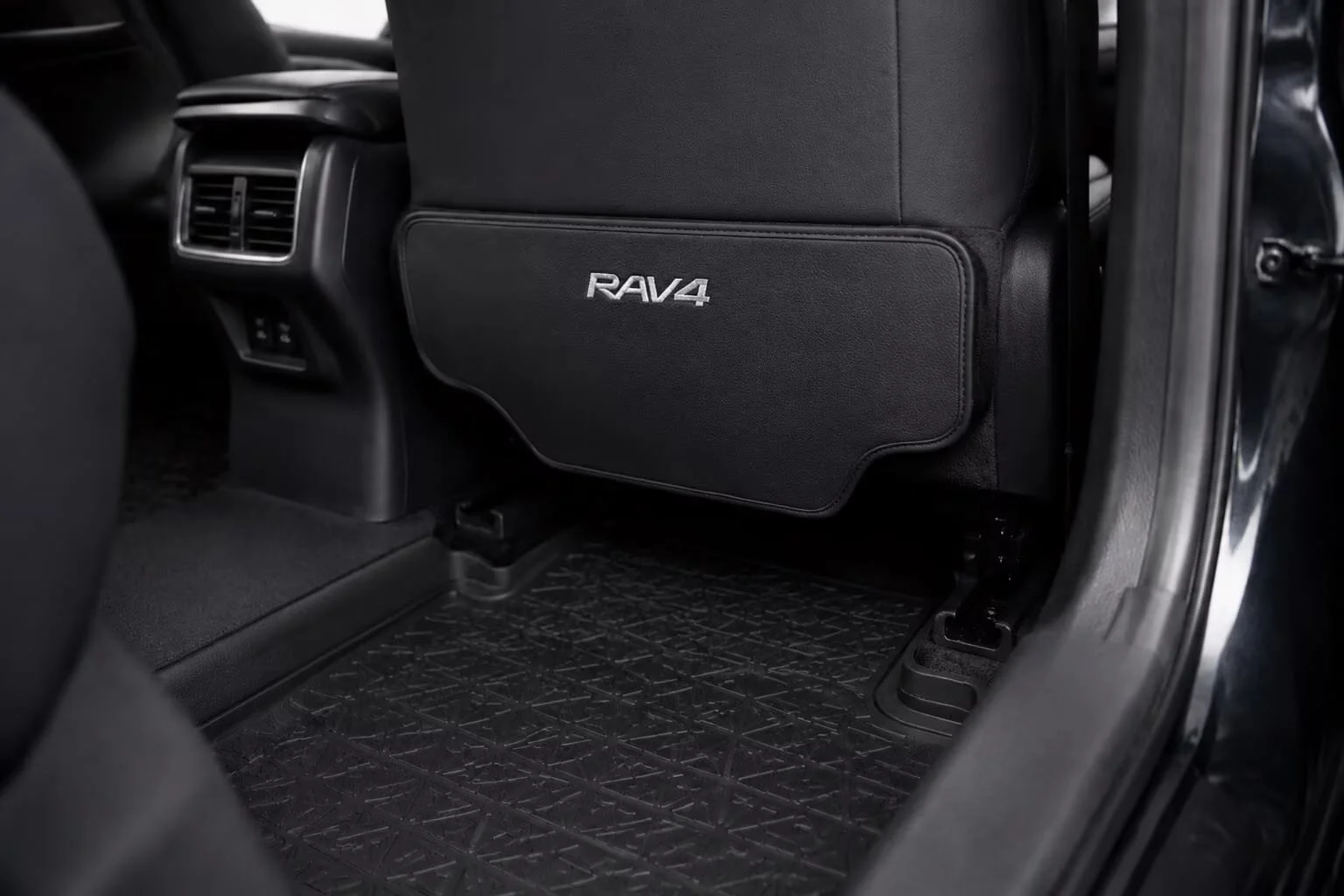
Every StopDirtyKicks mat is built from the same proven eco-leather — wipe-clean, waterproof, pet-hair-resistant, and kick-proof, with a snap-in install that takes about 3 seconds per seat. What changes from car to car is the shape: each pattern is cut specifically for that model’s lower seat back contour and side bolsters, so it seals the gap instead of leaving the fabric exposed the way a generic universal mat would.
What Eco-Leather Actually Means for Durability
“Eco-leather” gets used loosely across the seat cover market, so it’s worth being specific about what’s actually on the mat. It’s a synthetic, textured surface engineered to resist the two things that ruin fabric trim fastest: standing moisture and repeated abrasion. Unlike the suede or cloth trim it sits over, it doesn’t have pores for mud or pet dander to work into — spills sit on the surface until you wipe them, rather than soaking in and staining.
The scratch resistance matters more than it sounds. Shoe kicks aren’t a one-time event — it’s the same motion, in the same spot, hundreds of times over a car’s life. A surface that shows wear after a few months defeats the purpose. The material is rated for repeated flexing and abrasion specifically because that lower seat back zone takes more repetitive contact than almost anywhere else in the cabin, including the floor mats.
How Installation Actually Works
The mat mounts using integrated straps that loop around the seat frame’s existing structure below the trim line — the same anchor points your factory upholstery is already built around. There’s no drilling, no adhesive, and nothing permanent: you’re not modifying the seat, you’re wrapping a protective layer around a section that’s already exposed.
In practice: unfold the mat, align it against the lower seat back where the trim strip meets the seat base, and secure the straps around the frame. Most people get the alignment right on the first try because the pattern is cut to match your specific model’s contour — there’s no guessing where the edges should sit. Both sides take under a minute combined, and the mat stays in place through normal use, including folding rear seats down for cargo.
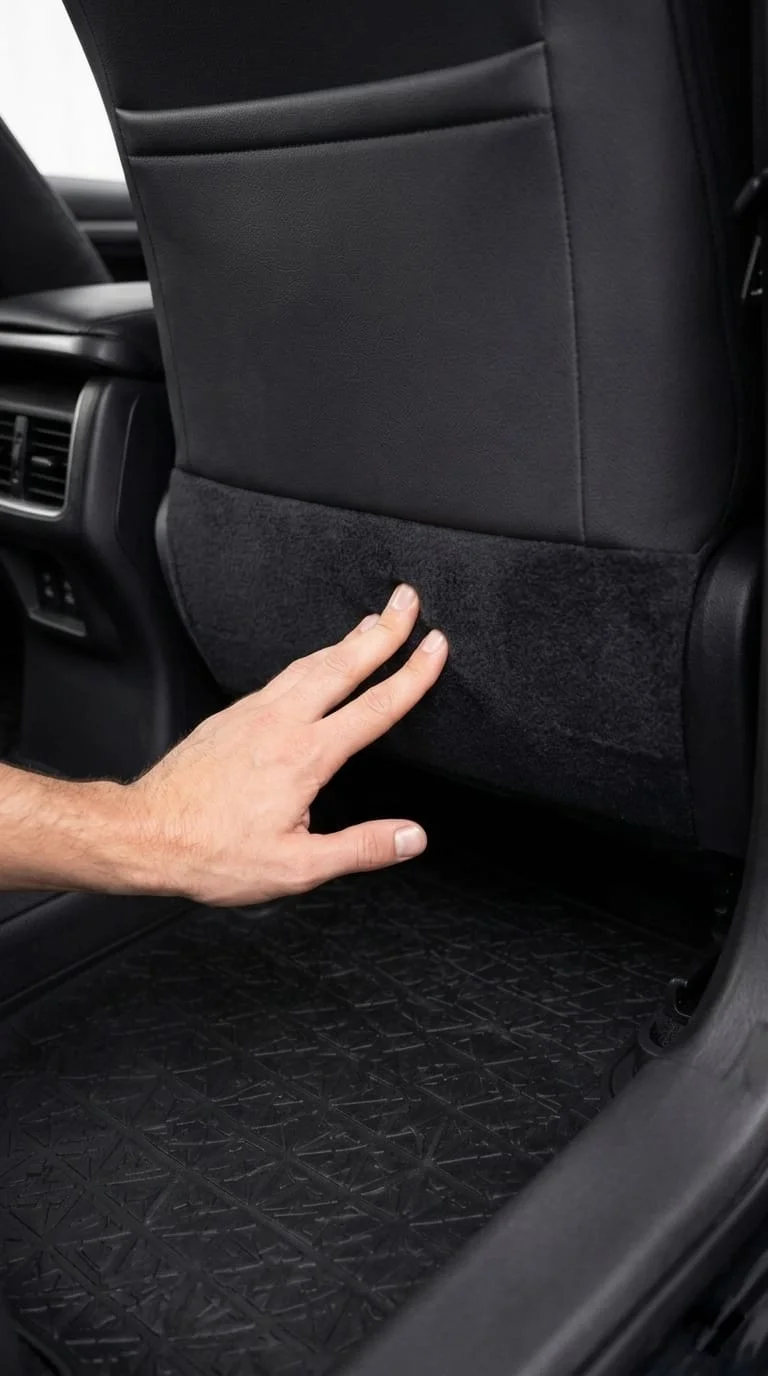
The one thing worth double-checking after install: make sure the straps are seated around the frame itself, not just looped over the seat cushion foam. It’s a small distinction, but it’s the difference between a mat that stays put through months of use and one that gradually works loose.
Custom-Fit vs. Universal: Why the Difference Isn’t Cosmetic
A universal mat is cut to a size that roughly works across many models, which means it’s built to the largest common denominator — loose enough to fit a wide seat, which leaves gaps and slack on a narrower one. That slack is where the problem starts: a mat that shifts or bunches exposes the exact fabric strip it was bought to cover, and the loose edges themselves become a new snag point for kicks and scuffs.
A custom-fit pattern is mapped to one model’s seat back contour, side bolster shape, and trim width specifically. It sits flush against the factory upholstery instead of floating over it, which is what makes it read as a factory feature rather than an aftermarket accessory. The tradeoff is real: a universal mat fits more cars adequately, while a custom pattern fits one car well. For a zone this visible, well tends to matter more than adequately.
Choosing by How You Actually Use Your Car
The lower seat back trim wears differently depending on what regularly touches it, so it’s worth matching your choice to your actual use case rather than buying generically:
- Families with kids: this is the single highest-contact zone in the back seat — it’s exactly where feet land during every ride. Waterproof, wipe-clean material matters more here than anywhere else in the cabin.
- Pet owners: fur and dander work into porous fabric trim in a way that’s nearly impossible to fully remove once embedded. A smooth eco-leather surface stops it from taking hold in the first place.
- Rideshare and carpool drivers: this zone sees contact from passengers you don’t know and can’t control, multiple times a day — durability and quick wipe-downs between rides matter more than anything else.
- Leased vehicles: trim damage in this zone is exactly the kind of wear inspectors flag at turn-in. Protecting it proactively is cheaper than a reconditioning charge.
Mistakes People Make Buying This Category
The most common one is buying by seat size instead of by model and year. Two SUVs with similar-looking rear seats can have completely different bolster shapes and trim widths — a “medium” universal size doesn’t account for that, but a pattern cut for your specific model and year does. If a listing doesn’t ask for your exact year, that’s worth noticing before you order.
The second is assuming a mid-generation redesign doesn’t matter. Manufacturers frequently reshape the seat back trim during a model’s run — the Honda CR-V’s 5th and 6th generations, for example, use different trim shapes despite being only a few years apart. Ordering by model name alone, without checking the year range, is the single most common reason a “custom-fit” product still doesn’t sit flush.
Is It Worth It?
At $22.99, the honest comparison isn’t against doing nothing — it’s against the cost of the alternative. Reupholstering or professionally cleaning a stained fabric trim strip runs well into three figures, and by the time it’s visibly stained, the damage is usually set into the fibers rather than sitting on the surface. A mat that prevents the stain costs a fraction of fixing one.
The other case for it is less about money and more about the small daily friction of owning a car you actually like getting into. A seat back that still looks clean after two years of kids, groceries, and the occasional muddy shoe is a small thing, but it’s the kind of small thing that adds up to a car that still feels well cared for — which matters whether you’re keeping it for years or handing it off at resale.
Find Your Vehicle
We currently make custom-fit kick mats across 24 models spanning Toyota, Honda, Lexus, Nissan, and Subaru — with new patterns added as we laser-map additional vehicles. Toyota has the deepest coverage since it’s the platform where this problem shows up most often across our customer base, but the same fitment standard applies to every model listed. Click through to see pricing and exact year-range fitment for your car:
Toyota
- Toyota RAV4 (2013–2026)
- Toyota Camry (2018–2025)
- Toyota Prius (2009–2024)
- Toyota Prado (2020–2024)
- Toyota Fortuner (2015–2026)
- Toyota Sienna (2021–2025)
- Toyota Hilux (2018–2024)
- Toyota Harrier (2020–2023)
- Toyota Yaris Cross (2020–2024)
- Toyota Yaris (2015–2024)
- Toyota C-HR (2016–2024)
Honda
Lexus
- Lexus CT200H (2011–2023)
- Lexus ES (2017–2025)
- Lexus NX (2015–2025)
- Lexus RX 2017–2022
- Lexus RX 2023–2025
- Lexus UX (2015–2025)
Nissan
Subaru
Related Reading
- The Dirtiest Spot in Your Car Is Probably One You’ve Never Cleaned
- How to Install a Seat Back Kick Mat in 3 Seconds
- Universal vs. Custom-Fit Seat Back Protectors: What’s Actually Different
- The Best Way to Keep Dog Hair Off Your Car Seat Backs
- Toyota RAV4 Interior Care: The Spot Most Owners Miss
- Do Seat Back Protectors Actually Work? Honest Answers
Frequently Asked Questions
Will this fit my exact trim level?
Our patterns are cut to the seat back shape for each model and year range listed above. If your trim has a non-standard seat design, reach out to our support team before ordering and we’ll confirm fitment.
How long does installation take?
Most customers install both mats in well under a minute — about 3 seconds each side, no tools required, it’s a direct snap-fit over your existing seat back.
What if my car model isn’t listed?
We’re adding new vehicle patterns regularly. Contact us and let us know what you drive — it helps us prioritize what to laser-map next.
What’s your return policy?
Every order is covered by our 30-day return policy. See our Return & Refund Policy for details.