
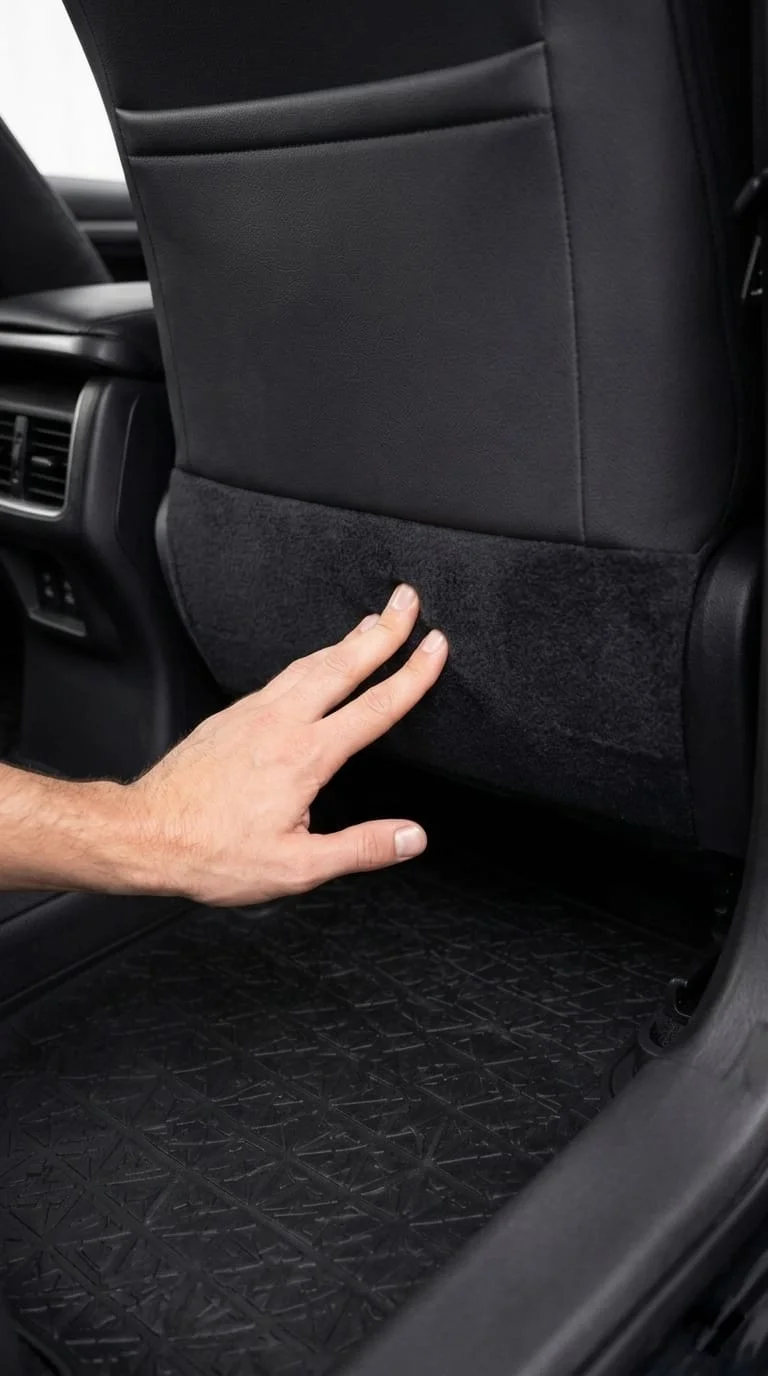
Full seat covers and lower-trim protectors solve different problems, even though they both show up when you search “protect my car seats.” A full cover wraps the entire seat — base, backrest, bolsters, headrest. A lower-trim protector covers one specific zone: the fabric strip below the leather seat back that actually takes the daily hit. The right choice depends on which problem you actually have.
What Full Coverage Actually Costs
A 5-seat full leather-style cover set typically runs $50 to $90, sometimes more for vehicle-specific tailored fits with seatbelt and airbag cutouts. That price covers every seat in the car — front and rear, base and backrest, bolsters included. It’s a full-interior solution, priced like one.
The tradeoff is installation complexity: multi-panel construction with anchoring straps or hooks, and on vehicles with side airbags, the cover has to include compliant release seams or it becomes a real safety issue. That’s not a minor detail — it’s the reason full covers take longer to install and cost more to manufacture correctly.
What Lower-Trim Protection Costs
A custom-fit lower trim protector runs $22.99 — a fraction of full-coverage pricing, because it’s solving a fraction of the problem. It doesn’t touch the leather seat back, the bolsters, or the headrest, because those surfaces don’t need it. It covers exactly the zone that does: the fabric or suede strip that traps mud, pet hair, and shoe scuffs every time someone climbs into the back seat.
Because it’s not wrapping the whole seat, there’s no airbag compliance issue to engineer around and no multi-panel installation — it straps on in seconds.
Coverage: The Question That Actually Matters
The honest way to decide isn’t “which is better” — it’s “what’s actually getting damaged.” If the leather seat back, bolsters, and headrest are staying clean on their own and it’s specifically the lower trim strip showing wear, a full cover is solving a problem you don’t have while leaving the real one exposed unless it’s one of the rare designs with a dedicated lower-trim panel. If the whole seat is worn — sun-faded bolsters, cracked headrest, general age — that’s a full-coverage situation a lower-trim protector was never meant to solve.
Most owners land somewhere specific: the Honda CR-V and Camry both show this exact pattern in real-world wear — leather ages slowly, but the trim strip below it gets kicked, scuffed, and muddied on a near-daily basis. That’s a one-zone problem, not a whole-seat problem.
Frequently Asked Questions
Can I use a lower-trim protector if I already have a full seat cover?
Yes, though most full covers already extend down to this zone — check your specific cover’s coverage before doubling up.
Does a lower-trim protector interfere with side airbags?
No — since it doesn’t cover the bolsters or seat structure the airbag deploys through, there’s no compliance concern the way there is with full-seat covers.
Which one protects resale value better?
Whichever one matches your actual wear pattern. A pristine leather seat back with a stained trim strip looks worse to a buyer than a fully-covered seat would — protecting the zone that actually shows wear is what preserves the impression of a well-kept interior.